

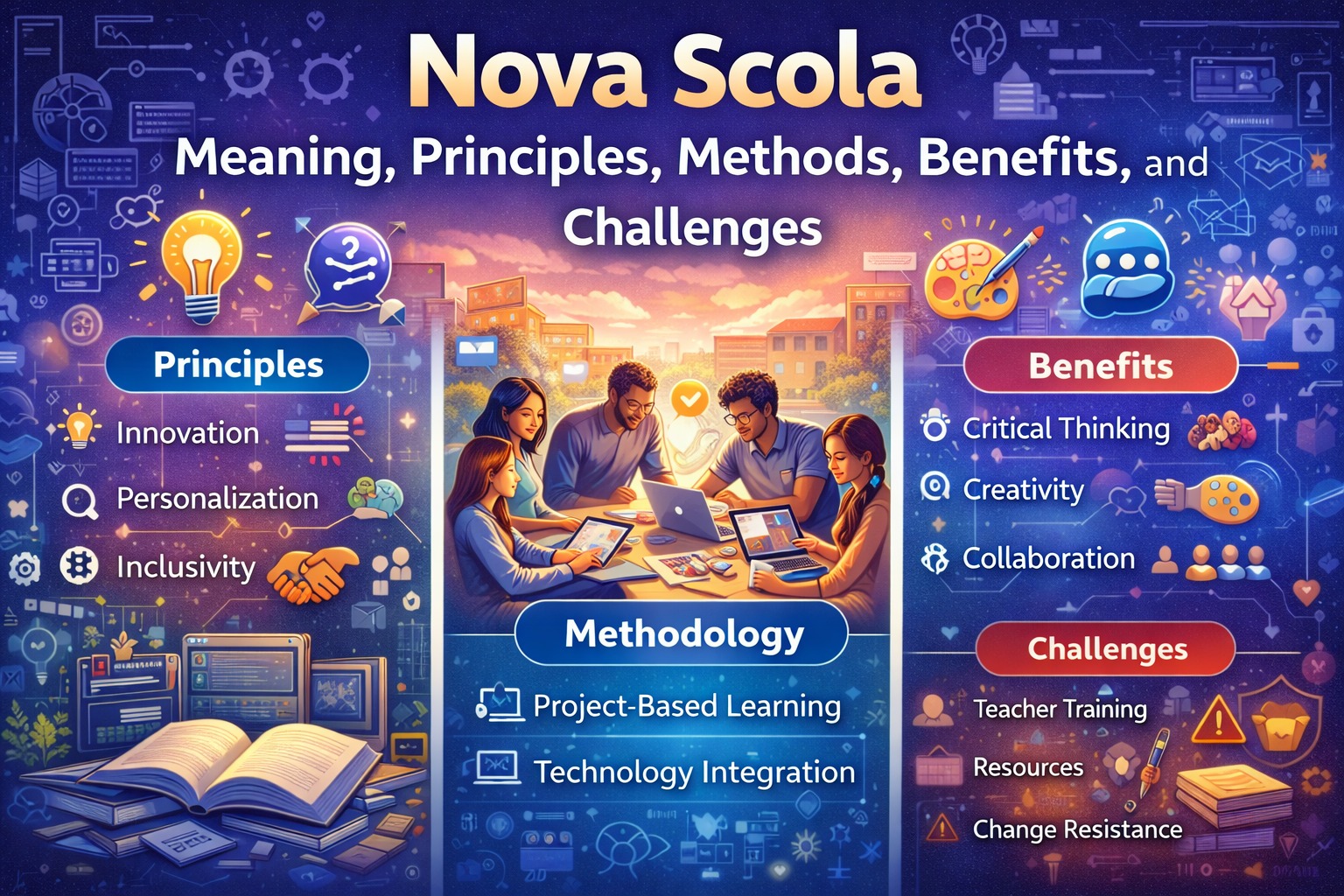

Nova Scola is a term that appears in many online articles and search results related to education. The phrase comes from two simple words: “nova,” which means new, and “scola,” which means school. Together, Nova Scola means “new school, in most online content, Nova Scola is not one single school or official system. Instead, it is used as a general name for modern education ideas. These ideas focus on improving how students learn by using new teaching methods, technology, creativity, and real-world learning.
This guide explains what Nova Scola means, how it works in practice, what benefits it offers, the challenges it faces, and how teachers, parents, and students can use its ideas in daily learning classroom 15x
Meaning and Background of Nova Scola
Nova Scola is often used to describe a shift away from traditional classroom models. Traditional schools usually focus on lectures, memorization, and exams. Nova Scola focuses more on student-centered learning.
Literal Meaning
The literal meaning of Nova Scola is simple:
-
Nova = New
-
Scola = School
This shows the main idea: a new way of thinking about schools and learning.
Why the Term Is Used Today
The term is used because education is changing. Students today face different challenges than in the past. They need skills such as:
-
Problem solving
-
Communication
-
Creativity
-
Digital skills
-
Teamwork
Nova Scola is a way to describe education that supports these modern needs.
Why There Is Confusion Around the Name
Some real schools use similar names, such as “Schola Nova.” These are actual institutions with campuses, teachers, and students. Nova Scola, as used in many articles, is more like a philosophy or model.
Because of this, people searching for Nova Scola may find:
-
Articles about modern education methods
-
Websites of schools with similar names
-
Blogs about education innovation
Understanding the context of each source helps avoid confusion.
Core Principles of Nova Scola
Nova Scola is built on a few key principles that guide teaching and learning.
Student-Centered Learning
In Nova Scola, students are active participants in learning. Instead of only listening to teachers, students:
-
Ask questions
-
Work on projects
-
Explore topics that interest them
-
Take part in discussions
This helps students feel more engaged and responsible for their learning.
Personalized Learning
Not all students learn at the same speed or in the same way. Nova Scola supports personalized learning, which means:
-
Lessons can be adjusted for different learning styles
-
Students can work at their own pace
-
Teachers provide individual support
Innovation in Teaching
Nova Scola encourages teachers to try new teaching methods, such as:
-
Project-based learning
-
Group work
-
Use of digital tools
-
Real-world problem solving
Inclusivity and Diversity
Nova Scola promotes learning environments where:
-
All students feel welcome
-
Different backgrounds are respected
-
Learning materials reflect diverse cultures and experiences
Lifelong Learning
The goal of Nova Scola is not only to help students pass exams, but also to help them become lifelong learners who:
-
Enjoy learning
-
Adapt to change
-
Continue to grow their skills after school
Teaching Methods in Nova Scola
Nova Scola uses modern teaching methods that focus on understanding rather than memorization.
Project-Based Learning
In project-based learning, students work on projects that solve real-world problems. For example:
-
Creating a small business plan
-
Designing a simple app
-
Researching environmental issues
This method helps students connect learning to real life.
Experiential Learning
Experiential learning means learning by doing. Students learn through:
-
Experiments
-
Field trips
-
Hands-on activities
-
Practical tasks
Interdisciplinary Learning
Nova Scola encourages combining subjects. For example:
-
A project that mixes science and art
-
A lesson that combines history and technology
This helps students see how different subjects connect.
Technology-Enhanced Learning
Technology plays a big role in Nova Scola. Tools may include:
-
Online learning platforms
-
Digital presentations
-
Educational apps
-
Virtual classrooms
These tools support flexible and interactive learning.
Holistic Development of Students
Nova Scola focuses on the whole student, not only academic results.
Academic Skills
Students still learn core subjects such as:
-
Math
-
Science
-
Language
-
Social studies
Creative Skills
Creativity is encouraged through:
-
Art projects
-
Creative writing
-
Design tasks
-
Music and performance
Social and Emotional Skills
Students develop:
-
Communication skills
-
Teamwork
-
Emotional awareness
-
Confidence
Critical Thinking
Students learn to:
-
Analyze information
-
Ask thoughtful questions
-
Solve problems
-
Think independently
Nova Scola in Practice
Many schools and teachers use Nova Scola ideas in their classrooms, even if they do not use the name directly.
How Schools Apply Nova Scola Ideas
Schools may:
-
Use project-based lessons
-
Introduce flexible seating
-
Encourage group work
-
Use digital tools for learning
Examples of Nova Scola Practices
-
Students working in teams to solve community problems
-
Teachers using real-life examples in lessons
-
Students creating presentations instead of only taking tests
Classroom Environment
Nova Scola classrooms often look different from traditional classrooms. They may include:
-
Group tables instead of rows of desks
-
Learning corners
-
Digital screens
-
Spaces for discussion
Benefits of Nova Scola for Students
Nova Scola offers many benefits for students.
Better Engagement
Students are more engaged when learning is active and meaningful.
Deeper Understanding
Learning through projects helps students understand topics more deeply.
Skill Development
Students develop skills such as:
-
Communication
-
Teamwork
-
Problem solving
-
Digital literacy
Motivation and Confidence
When students take part in their learning, they often feel more motivated and confident.
Challenges and Criticisms of Nova Scola
While Nova Scola offers many benefits, it also faces challenges.
Resistance to Change
Some teachers and schools are used to traditional methods and may find it hard to change.
Teacher Training Needs
Teachers need training to use new methods effectively.
Resource Limitations
Not all schools have access to:
-
Technology
-
Training programs
-
Learning materials
Assessment Difficulties
Traditional exams may not fully measure skills like creativity and teamwork.
Comparison Between Traditional Schooling and NovaScola
The table below shows a simple comparison.
| Feature | Traditional Schooling | NovaScola Approach |
|---|---|---|
| Teaching style | Lecture-based | Project-based |
| Student role | Passive | Active |
| Learning pace | Same for all | Personalized |
| Technology use | Limited | Integrated |
| Focus | Exams and grades | Skills and understanding |
| Classroom setup | Rows of desks | Flexible spaces |
This table shows how NovaScola represents a shift in education style.
Role of Teachers in NovaScola
Teachers play a key role in NovaScola.
Teacher as a Guide
Instead of only giving lectures, teachers:
-
Guide discussions
-
Support projects
-
Help students find answers
Planning Lessons
Teachers plan lessons that:
-
Include real-world examples
-
Encourage collaboration
-
Use digital tools
Assessment Methods
Teachers use different assessment methods, such as:
-
Project evaluations
-
Presentations
-
Portfolios
-
Peer feedback
Role of Parents in Supporting NovaScola
Parents also support NovaScola learning.
Supporting Learning at Home
Parents can:
-
Encourage curiosity
-
Support homework projects
-
Provide learning resources
Communication With Schools
Parents can:
-
Stay informed about teaching methods
-
Communicate with teachers
-
Support school activities
Creating a Learning Environment
At home, parents can create a space for:
-
Reading
-
Creative activities
-
Quiet study
Technology and NovaScola
Technology supports NovaScola in many ways.
Benefits of Technology in Learning
-
Access to online resources
-
Interactive learning tools
-
Flexible learning schedules
-
Communication between teachers and students
Responsible Use of Technology
Students should learn:
-
Digital safety
-
Responsible online behavior
-
Balanced screen time
NovaScola and Modern Education Trends
NovaScola fits well with modern education trends.
Focus on Skills for the Future
Education today focuses on skills needed for future jobs, such as:
-
Critical thinking
-
Collaboration
-
Creativity
-
Digital skills
Global Learning
Students can connect with:
-
Online communities
-
International projects
-
Global learning resources
Blended Learning
Blended learning combines:
-
Classroom learning
-
Online learning
This offers flexibility and variety.
Common Misunderstandings About NovaScola
There are some common misunderstandings.
NovaScola Is Not One School
NovaScola is not a single institution. It is a general idea or model.
NovaScola Does Not Remove Traditional Subjects
Students still learn core subjects. NovaScola changes how they are taught.
NovaScola Is Not Only About Technology
Technology supports learning, but the main focus is on teaching methods and student engagement.
Practical Steps for Schools to Apply NovaScola Ideas
Schools can start small.
Start With One Project
Teachers can introduce one project-based lesson.
Encourage Collaboration
Students can work in small groups.
Use Simple Digital Tools
Schools can start with basic tools such as:
-
Online presentations
-
Educational videos
-
Learning platforms
Train Teachers
Provide training for teachers to learn new methods.
Involve Parents
Explain new methods to parents and involve them in school activities.
Future of NovaScola
Nova cola represents the future direction of education.
More Personalized Learning
Learning will become more personalized to meet student needs.
Greater Use of Technology
Technology will play a larger role in classrooms.
Focus on Real-World Skills
Education will focus more on practical skills for life and work.
Global Collaboration
Students will connect more with learners around the world.
Conclusion
NovaScola is a way of thinking about education that focuses on new methods of teaching and learning. It represents a shift from traditional, lecture-based classrooms to student-centered, project-based, and technology-supported learning. The main goal of NovaScola is to prepare students for real-life challenges by helping them develop skills such as critical thinking, creativity, collaboration, and digital literacy. While there are challenges in applying these ideas, many schools and teachers are already using parts of the Nov Scola approach in their classrooms.