

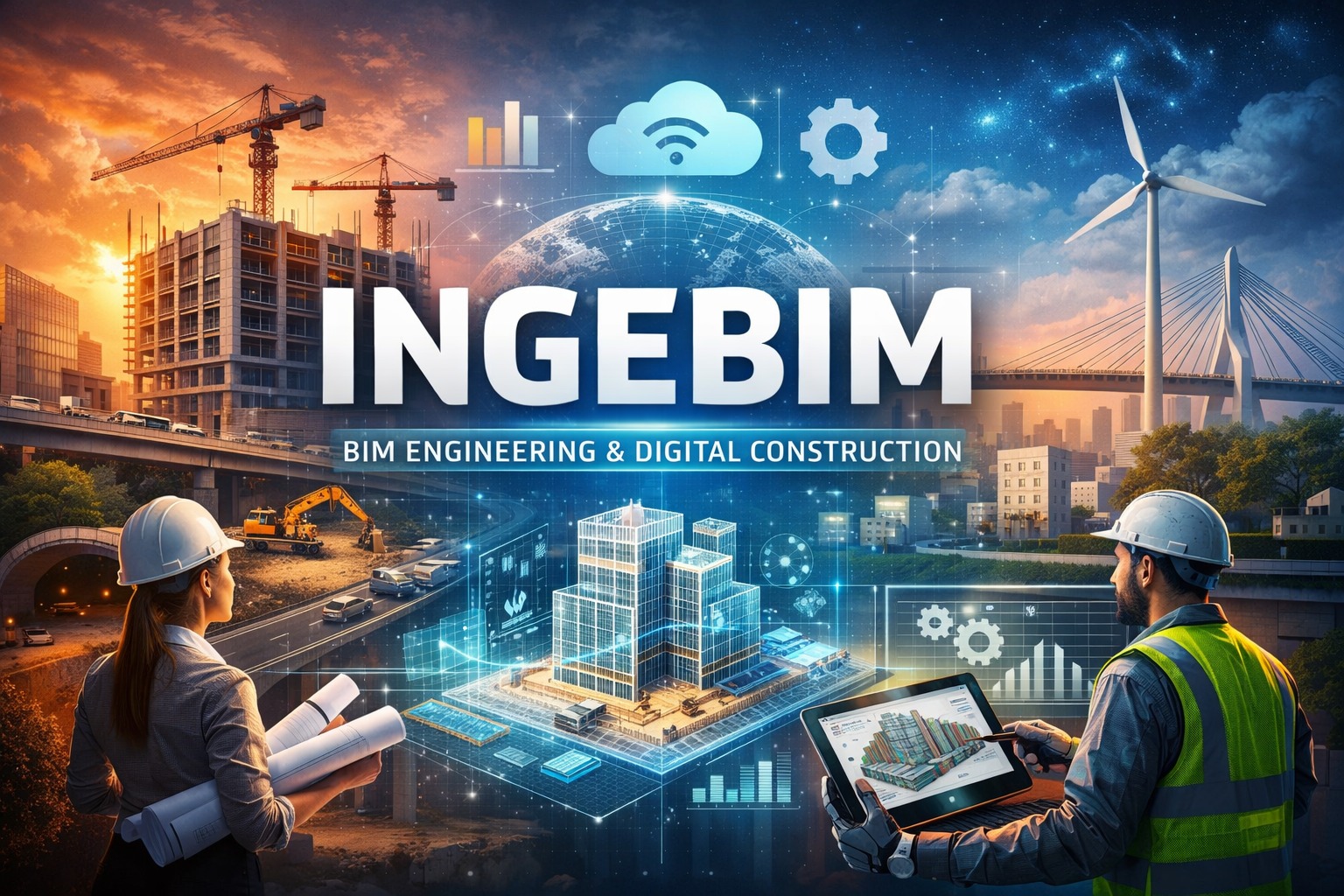

The term Ingebim is becoming more visible in online search results, especially in fields related to engineering, construction, and digital technology. However, many people feel confused when they first encounter this word. Some websites describe it as a company name, others explain it as a technical method, and a few even use it in completely different contexts like creativity or finance. To understand Ingebim clearly, we need to look at the most reliable and consistent information available. When we analyze the top-ranking websites, one strong pattern appears: Ingebim is mainly connected with Building Information Modeling (BIM) and digital engineering practices SovApp
What is Ingebim?
Ingebim is best understood as a combination of engineering and BIM (Building Information Modeling). The word itself suggests this mix:
-
“Inge” → Engineering
-
“BIM” → Building Information Modeling
So, Ingebim refers to a system or methodology where engineering processes are fully integrated with BIM technology.
Simple Definition
Ingebim is a digital way of planning, designing, building, and managing projects using shared 3D models and real-time data.
Key Idea
Instead of working separately, all teams (engineers, architects, contractors) work together on one shared digital model.
Difference Between Traditional BIM and Ingebim
| Feature | Traditional BIM | Ingebim |
|---|---|---|
| Focus | 3D modeling | Full project lifecycle |
| Collaboration | Limited coordination | Fully integrated teamwork |
| Data use | Basic design data | Advanced data (cost, time, performance) |
| Scope | Design stage mainly | Design + construction + operation |
| Decision-making | Manual | Data-driven |
From this table, we can see that Ingebim is a more advanced and complete version of BIM, not just a simple extension.
Core Principles of Ingebim
Ingebim works based on a few important principles. These principles are the foundation of how the system operates.
Integrated Collaboration
One of the biggest strengths of Ingebim is teamwork.
-
All professionals work together in one system
-
Engineers, architects, and contractors share the same data
-
Communication becomes faster and clearer
-
Mistakes are reduced because everyone sees the same model
This removes the problem of miscommunication between different teams.
Data-Rich Modeling
In Ingebim, models are not just 3D shapes. They include important information.
-
Cost details
-
Time schedules
-
Material specifications
-
Performance data
This makes the model more powerful because it becomes a complete source of information.
Lifecycle Management
Ingebim does not stop at design. It covers the full project life.
-
Planning stage
-
Design stage
-
Construction stage
-
Operation and maintenance
This helps companies manage projects better even after construction is finished.
Key Components of Ingebim
To understand how Ingebim works, we need to look at its main components.
3D Modeling
-
Creates a visual representation of the project
-
Helps in better understanding of design
Clash Detection
-
Finds conflicts between systems (e.g., pipes vs structure)
-
Prevents costly mistakes
Digital Twins
-
A digital copy of the real structure
-
Used for monitoring and maintenance
Workflow Standardization
-
Ensures consistent processes
-
Improves efficiency
Real-Time Collaboration Tools
-
Teams can update data instantly
-
Reduces delays
Applications of Ingebim
Ingebim is used in many industries, especially where complex projects are involved.
Construction and Infrastructure
This is the main area where Ingebim is applied.
-
Roads and highways
-
Railways
-
Bridges
-
Tunnels
-
Airports
These projects are complex and require coordination between many teams.
Engineering and Architecture
Ingebim helps engineers and architects work together smoothly.
-
Structural design
-
MEP (Mechanical, Electrical, Plumbing) systems
-
3D visualization
Facility Management
After construction, Ingebim continues to be useful.
-
Maintenance planning
-
Asset tracking
-
Performance monitoring
This ensures the building works efficiently for many years.
Benefits of Ingebim
Ingebim provides many advantages compared to traditional methods.
Main Benefits
-
Better teamwork and communication
-
Fewer errors and rework
-
Faster project completion
-
Cost savings
-
Improved safety
-
Better visualization
-
Smart decision-making
Detailed Comparison of Benefits
| Area | Traditional Method | Ingebim Advantage |
|---|---|---|
| Communication | Separate teams | Shared platform |
| Errors | High | Low |
| Cost Control | Difficult | Accurate |
| Time Management | Delays common | Faster delivery |
| Visualization | 2D drawings | 3D models |
| Maintenance | Manual tracking | Digital monitoring |
This clearly shows how Ingebim improves every stage of a project.
Challenges in Using Ingebim
Even though Ingebim has many benefits, it also comes with some challenges.
High Initial Cost
-
Software and tools are expensive
-
Training staff requires investment
Learning Curve
-
Teams need time to understand the system
-
Requires skilled professionals
Resistance to Change
-
Some companies prefer traditional methods
-
Fear of new technology
Data Management
-
Large amount of data needs to be handled
-
Requires proper systems
Standardization Issues
-
Different companies may use different standards
-
Can create compatibility problems
Despite these challenges, most companies adopt Ingebim because of its long-term benefits.
Ingebim Beyond Construction
Interestingly, not all websites define Ingebim in the same way. Some use the term in broader contexts.
As a Digital Concept
Some platforms describe Ingebim as a general digital system that includes:
-
Automation
-
Cloud computing
-
Data analytics
This expands its meaning beyond construction.
As a Brand or Identity
In some cases, Ingebim is treated as a brand name or concept.
-
Used for startups
-
Represents innovation
-
Suggests modern technology
As a Mindset
A few sources describe Ingebim as a way of thinking.
-
Creativity
-
Flexibility
-
Continuous improvement
Although these meanings exist, they are less consistent compared to the BIM-related definition.
Future of Ingbim
The future of Ingbim looks very promising. Technology is improving quickly, and Ingbim is expected to grow with it.
Key Trends
-
Use of Artificial Intelligence (AI)
-
Advanced digital twins
-
Cloud-based collaboration
-
Smart cities development
-
Sustainable engineering solutions
What This Means
-
Projects will become smarter
-
Decisions will be faster
-
Costs will be reduced further
-
Maintenance will be more efficient
In the future, Ingbim may become a standard practice in all major construction projects.
Why Ingbim is Important Today
In today’s world, projects are becoming more complex. Traditional methods are no longer enough.
Ingbim helps solve modern problems such as:
-
Lack of coordination
-
Budget overruns
-
Project delays
-
Poor maintenance planning
By using digital tools and shared data, Ingbim provides a more reliable and efficient system.
Practical Example of Ingbim
To understand better, imagine building a highway.
Without Ingbim
-
Engineers work separately
-
Mistakes are found late
-
Costs increase
With Ingbim
-
All teams use one model
-
Problems are detected early
-
Project runs smoothly
This simple example shows the real value of Inebim.
FAQs
What is Ingbim?
Ingbim is a modern engineering approach that combines Building Information Modeling (BIM) with digital tools to manage construction projects efficiently. It helps teams work together using shared data and 3D models.
How is Ingbim different from BIM?
BIM mainly focuses on creating 3D models, while Ingbim goes further by managing the entire project lifecycle, including planning, construction, and maintenance using advanced data and collaboration systems.
Conclusion
Ingbim is a powerful concept that combines engineering and digital technology through BIM systems. It represents a modern way of handling complex projects using collaboration, data, and smart tools. While some websites present different meanings of Ingbim, the most reliable and consistent interpretation is related to BIM-based engineering and infrastructure management Although there are challenges like cost and training, the benefits are much greater. That is why more companies are adopting this approach. Looking ahead, Ingbim will continue to grow with new technologies like AI and digital twins. It has the potential to become a standard method in the construction and engineering industries worldwide. In simple words, Ingbim is not just a tool or a system. It is a complete modern approach to building smarter, faster, and better projects.