

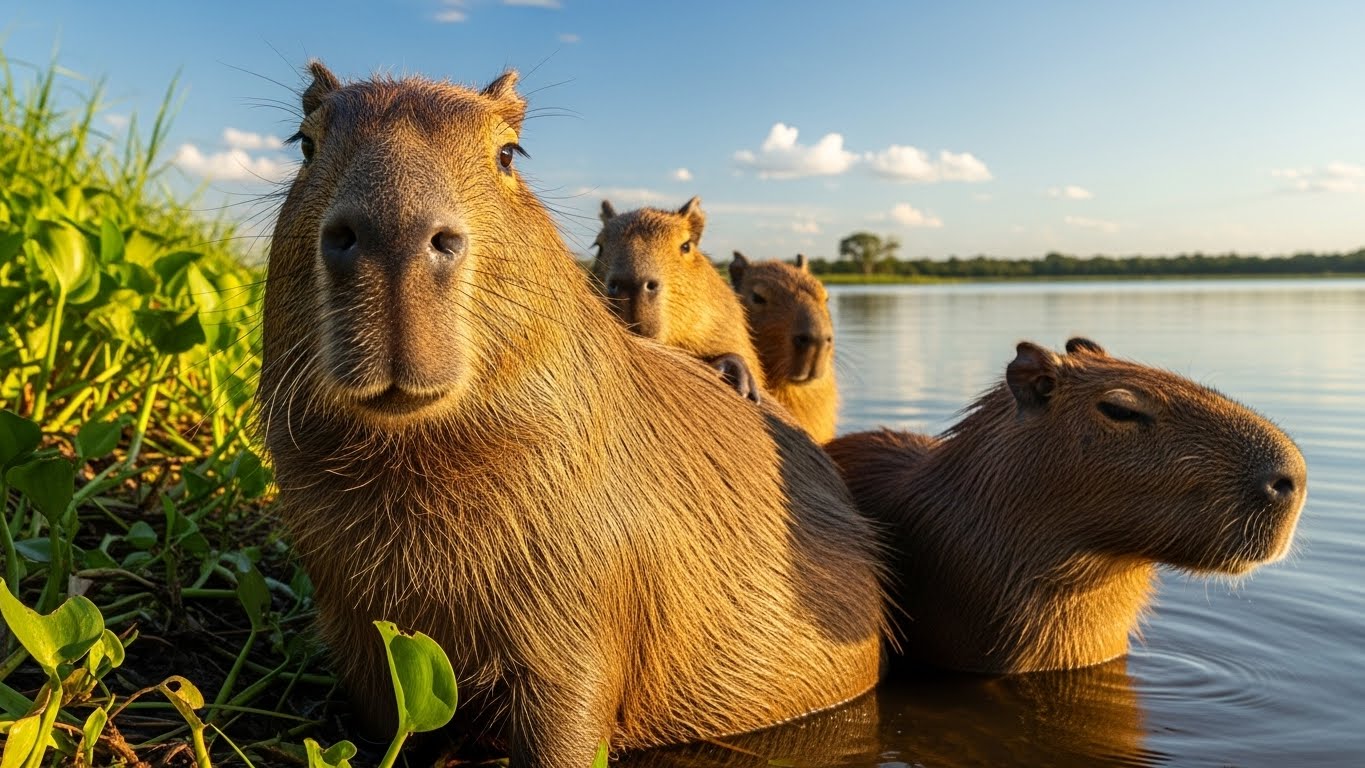
When you think of charming animals, the capybara might not be the first creature that comes to mind. Yet, this gentle giant is nature’s most sociable rodent, captivating animal lovers and researchers alike with its unique characteristics and friendly demeanor. Native to South America, these fascinating creatures live in groups and have a knack for making friends—both within their species and beyond. Join us as we dive into the world of capybaras, exploring their physical traits, social behaviors, and even their role in our ecosystem. Get ready to discover why these delightful rodents deserve a spot on your list of favorite animals.
Physical Characteristics and Natural Habitat
Capybaras are the world’s largest rodents, weighing between 77 to 146 pounds. These gentle giants can reach lengths of up to four feet, making them quite impressive in size.
Their bodies are adapted for a semi-aquatic lifestyle. With webbed feet and a streamlined shape, capybaras navigate effortlessly through water. Their short fur is coarse and often appears brown or reddish-brown, helping them blend into their natural surroundings.
You’ll typically find these creatures near rivers, lakes, or wetlands across South America. They thrive in areas rich with grass and vegetation—perfect for grazing.


These social animals prefer habitats where they can stay close to water sources while remaining hidden from predators like jaguars and caimans. This balance between safety and accessibility defines their unique living conditions in the wild.
Social Behavior and Communication
Capybaras are renowned for their friendly and sociable nature. They thrive in groups, often found lounging together by rivers or lakes. This social structure offers them safety in numbers against predators.
Communication among capybaras is fascinating. They use a range of vocalizations, including barks, whistles, and clicks. Each sound conveys different emotions or warnings to their companions.
Body language also plays a key role. Capybaras nuzzle each other as a sign of affection and grooming helps strengthen bonds within the group.
Their social interactions extend beyond just communication; they exhibit playful behaviors too. Rolling around on the grass and splashing in water showcases their joyful demeanor.
These charming rodents have an innate ability to connect with one another, making them some of the most endearing creatures in the animal kingdom.
Unique Adaptations of Capybaras
Capybaras are astonishingly well-adapted to their environments. Their webbed feet make them excellent swimmers, allowing them to navigate rivers and lakes with ease. This adaptation is crucial for escaping predators.
Their dense fur helps insulate them against varying temperatures. It also repels water, keeping them dry while they swim or lounge by the banks of waterways.
Another fascinating feature is their ability to regulate body temperature through social behavior. When it’s hot, capybaras often take a dip in the water or gather in shaded areas together.
Additionally, these sociable rodents have strong teeth that continually grow throughout their lives. This trait enables them to munch on tough grasses and aquatic plants without worry of wearing down their chompers.
These unique adaptations not only enhance survival but also highlight the remarkable evolution of capybaras as nature’s most sociable rodent.
Role in the Ecosystem
Capybaras play an essential role in their ecosystems, acting as both herbivores and prey. Their diet consists mainly of grasses and aquatic plants, helping to control vegetation growth. This grazing behavior fosters a healthy environment for other species.
These sociable rodents are often found near water sources, contributing to the nutrient cycle within these habitats. By consuming large amounts of plant material, capybaras facilitate seed dispersion through their droppings. This process supports plant diversity and helps maintain balanced ecosystems.
As prey animals, they offer sustenance to various predators such as jaguars, caimans, and large birds of prey. The presence of capybaras can indicate a thriving ecosystem where different species coexist harmoniously. Their social dynamics strengthen community bonds among different wildlife members in shared habitats.
Human Interaction and Domestication of Capybaras
Capybaras have captured the hearts of many around the world. Their gentle nature and sociable demeanor make them appealing companions. As a result, some people choose to keep these fascinating rodents as pets.
Domestication has been an interesting journey for capybaras. Unlike traditional pets, they require unique care and attention. These animals thrive in environments that mimic their natural habitat. A spacious area with access to water is essential for their well-being.
Interactions between humans and capybaras often reveal just how social these creatures are. They enjoy forming bonds not only with humans but also with other animals. This adaptability can lead to heartwarming relationships within mixed-species households.
However, owning a capybara isn’t without challenges. Prospective owners must understand their needs thoroughly before making such a commitment. Awareness about appropriate diets, space requirements, and socialization will ensure happier lives for both pet and owner alike.
Controversies Surrounding the Ownership of Capybaras
Owning a capybara can be a contentious issue. These charming rodents, native to South America, have gained popularity as exotic pets in various parts of the world. However, not everyone agrees that they belong in domestic settings.
Many argue that capybaras require specific care and socialization needs that most pet owners cannot meet. Their natural behaviors include living in large groups and swimming frequently—conditions hard to replicate at home.
Legal regulations add another layer of complexity. Some regions classify them as wild animals rather than pets, necessitating special permits or outright bans on ownership. This leaves potential owners navigating an intricate web of laws.
Animal welfare advocates raise concerns about the ethics of keeping such sociable creatures isolated from their kin. The debate continues as more people become enamored with these gentle giants yet remain unaware of the responsibilities involved in their care.
Conclusion: Appreciating the Fascinating Nature of Capybaras
Capybaras are truly remarkable creatures. Their sociable nature and unique adaptations make them fascinating subjects of study and admiration. Found primarily in South America, these gentle giants have captured the hearts of many.
As nature’s largest rodents, capybaras bring a special charm to their habitats. They thrive near water sources, showcasing their agility both on land and in aquatic environments. Their social structures highlight the importance of community among wildlife.
The role they play in the ecosystem cannot be overstated. As herbivores, capybaras help maintain vegetation levels while providing food for predators within their habitat. This delicate balance is essential for sustaining biodiversity.
Interactions with humans present a mixed bag of experiences. While some embrace them as pets or attractions at zoos, others face ethical dilemmas concerning ownership that spark debate.
Recognizing the beauty and complexity of capybaras encourages us to appreciate not just these animals but also the ecosystems they inhabit. There’s much more to learn about their habits and contributions to our world; each observation can lead to greater understanding and respect for all living beings around us.