

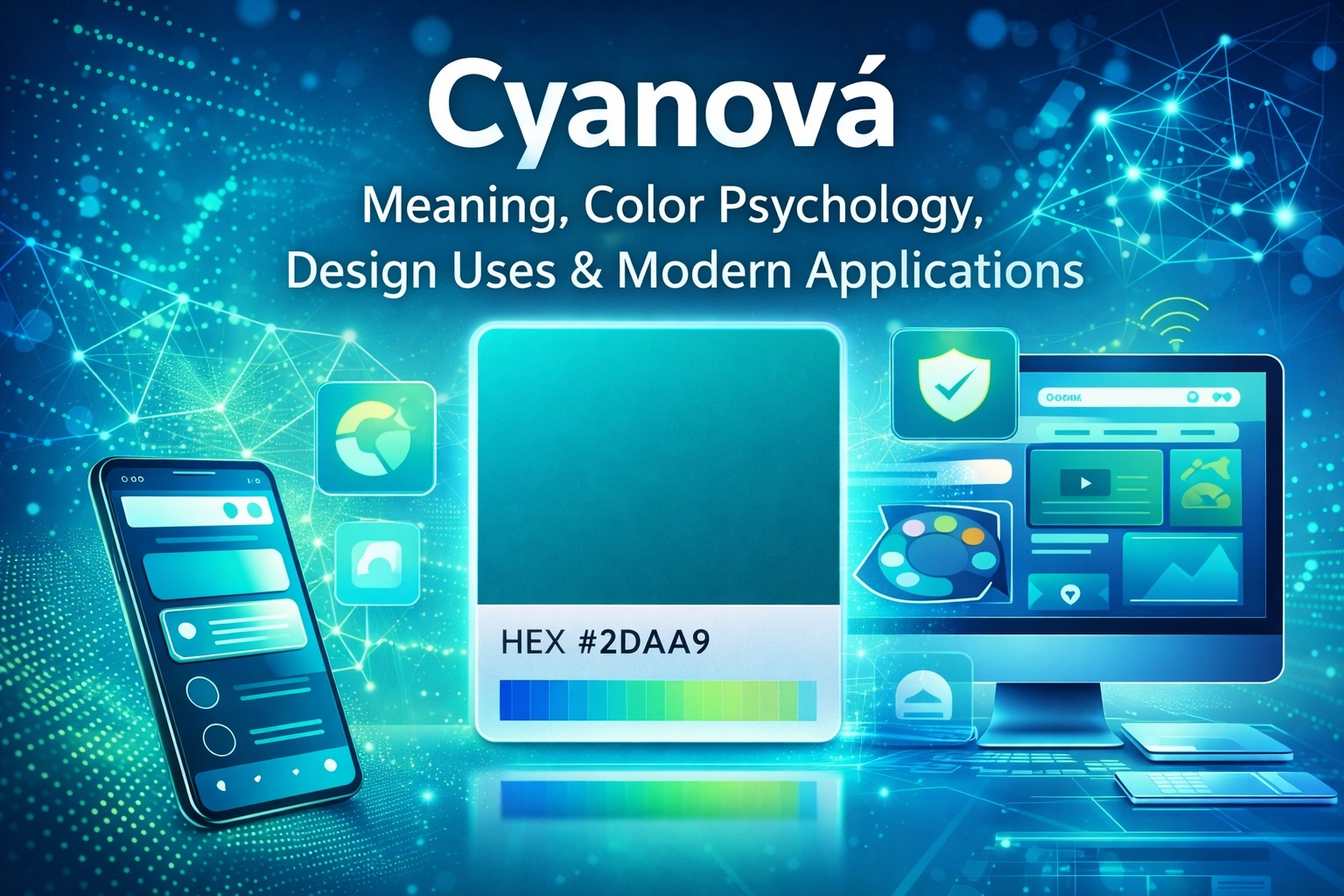

Colors play a powerful role in how people see the world. They influence emotions, creativity, branding, and even technology design. One color concept that has recently attracted attention in design discussions is Cyanová. Many people search for this term because they want to understand what it means, where it comes from, and how it is used in modern design and culture. In simple terms, Cyanová is often described as a modern blue-green color concept inspired by the cyan color spectrum. It represents a blend of freshness, clarity, calmness, and innovation. Designers, artists, and digital creators use cyan-inspired tones to create visual balance and modern aesthetics.
What Is Cyanová?
Cyanová is a term used to describe a cyan-inspired color concept that combines the calmness of blue with the freshness of green. It is often associated with creativity, clarity, and modern design. The color cyan itself sits between blue and green in the visible spectrum. Because of this position, cyan-based shades create a balanced and refreshing visual experience. Cyanová builds on this idea by representing a slightly broader and more creative interpretation of cyan. In many design discussions, Cyanová is seen as more than just a color. It can represent a design style, aesthetic concept, or visual identity that uses cyan tones to express innovation and modern thinking.
Key Characteristics of Cyanová
Several characteristics help describe Cyanová clearly:
-
It belongs to the blue-green color family
-
It is often associated with clarity and calmness
-
It creates a modern and futuristic visual appearance
-
It works well in digital design and branding
Because of these features, Cyanová has become popular in creative industries such as graphic design, branding, and digital media.
Origin and Meaning of the Word Cyanová
Understanding the origin of the word Cyanová helps explain its connection to color theory and design.
Linguistic Origin
The word is closely related to cyan, which comes from the Greek word kyanos, meaning dark blue. Over time, cyan became a recognized color term used in art, printing, and digital design.
Cyanová can be interpreted as a modern variation of cyan that emphasizes creativity and visual identity.
Conceptual Meaning
In modern design discussions, Cyanová is sometimes used as a descriptive concept rather than a strict color definition. It represents a range of blue-green shades that create a fresh, modern appearance.
Designers may use the term to describe:
-
cyan-based color palettes
-
futuristic design styles
-
digital aesthetics
Because of this flexible meaning, Cyanová is often associated with innovation and creativity.
Cyanová in the Color Spectrum
To understand Cyanová, it is helpful to look at where cyan sits in the visible light spectrum.
Position Between Blue and Green
Cyan is located between blue and green wavelengths of visible light. This position gives it a unique balance of cool tones.
Because of this balance, cyan-based colors often feel refreshing and clean.
Color Characteristics
Cyan-inspired shades like Cyanová share several important visual traits:
-
cool temperature
-
bright and energetic tone
-
high visual clarity
-
modern appearance
These characteristics make cyan-based colors popular in digital environments where clarity and readability are important.
Psychological Meaning of Cyanová
Colors influence human emotions and mental states. Cyanová, like other blue-green colors, often creates a sense of calm and focus.
Emotional Associations
Many designers and psychologists link cyan tones with the following feelings:
-
calmness
-
relaxation
-
clarity
-
inspiration
-
balance
Because of these emotional effects, cyan-based colors are often used in environments that aim to reduce stress and promote creativity.
Cognitive Effects
Some designers believe that cyan tones help people concentrate and think more clearly. This is why many digital platforms and technology brands use similar colors in their interfaces.
Visual Comfort
Cyan tones are generally easy on the eyes compared with highly saturated warm colors like red or orange. This makes them suitable for long-term viewing in digital applications.
Cyanová in Art and Creative Design
Artists and designers frequently use cyan-based colors because of their versatility and visual appeal.
Use in Visual Arts
In painting and illustration, cyan tones help create depth and contrast. Artists often use them to represent water, sky, and modern environments.
Cyanová-style colors can appear in:
-
abstract paintings
-
digital illustrations
-
modern art installations
These colors provide a balance between energy and calmness.
Graphic Design Applications
Graphic designers often use cyan-inspired palettes to create modern visual identities.
Common uses include:
-
logos
-
posters
-
digital advertisements
-
website graphics
Cyan tones work well with both dark and light backgrounds, making them highly flexible.
Photography and Digital Media
In photography, cyan-based color grading can create futuristic or cinematic effects. Designers may adjust color tones to produce a cool atmosphere in digital images.
Cyanová in Branding and Marketing
Many companies use cyan-based colors in their branding because they communicate clarity, innovation, and reliability.
Why Brands Use Cyanová
Businesses choose cyan-inspired colors for several reasons:
-
they look modern and technological
-
they represent clarity and transparency
-
they create a calm and trustworthy image
Because of these qualities, cyan-like colors appear frequently in technology and digital industries.
Industries That Use Cyanová Colors
Several industries rely heavily on cyan-based design elements:
-
technology companies
-
digital startups
-
healthcare brands
-
environmental organizations
These industries often want to communicate innovation and trust through their visual identity.
Applications of Cyanová Across Industries
Cyanová can be applied in many professional fields. The table below shows some of the most common uses.
| Industry | How Cyanová Is Used |
|---|---|
| Graphic Design | Logos, icons, and website themes |
| Printing | Part of the CMYK color model |
| Fashion | Clothing and accessory designs |
| Architecture | Modern interior color schemes |
| Digital Media | Mobile apps and web interfaces |
This wide range of applications shows how flexible cyan-based colors can be.
Cyanová in Technology and Digital Design
Technology companies often use cyan-like colors because they represent clarity and innovation.
User Interface Design
In UI design, cyan tones can highlight important elements such as buttons, icons, and navigation menus.
These colors help users identify interactive features quickly.
Web Design
Website designers often include cyan-based palettes to create modern and clean layouts.
Common uses include:
-
background gradients
-
text highlights
-
interface accents
Future Design Trends
As technology evolves, cyan-based aesthetics are becoming more common in futuristic design styles.
Examples include:
-
minimalist interfaces
-
cyber-inspired visuals
-
virtual reality environments
These trends show that cyan-inspired colors will likely remain important in digital design.
Cyanová in Nature
Nature provides many examples of blue-green color tones similar to Cyanová.
Natural Appearances
Examples of cyan-like colors in nature include:
-
ocean water in tropical regions
-
clear skies reflected in water
-
glacier ice formations
-
certain minerals and gemstones
These natural appearances help explain why cyan tones often feel refreshing and calming.
Connection With Environment
Because cyan-based colors appear frequently in water and sky environments, they are often linked with environmental themes.
Many eco-friendly brands use similar colors to represent sustainability and clean energy.
Cyanová vs Similar Colors
Cyanová is often confused with other blue-green shades. The table below explains how it compares with related colors.
| Color | Difference from Cyanová |
|---|---|
| Cyan | Base blue-green primary color |
| Turquoise | Slightly greener and brighter |
| Teal | Darker blue-green shade |
| Aqua | Lighter version of cyan |
Understanding these differences helps designers choose the right color for their projects.
How to Use Cyanová in Design Projects
Designers often use cyan-based palettes to create visually balanced compositions.
Color Combination Tips
Cyanová works well with several complementary colors.
Popular combinations include:
-
Cyanová and white for clean layouts
-
Cyanová and navy for contrast
-
Cyanová and coral for vibrant designs
These combinations can create modern and engaging visual effects.
Design Best Practices
When using cyan-inspired colors in design projects, consider the following tips:
-
use cyan tones for highlights or key elements
-
combine with neutral colors to avoid visual overload
-
maintain balance between bright and dark shades
Following these principles helps create effective and visually appealing designs.
Advantages of Using Cyanová
Cyanová provides several benefits for designers and brands.
Visual Advantages
Some of the main advantages include:
-
strong visual clarity
-
modern aesthetic appearance
-
versatility across different industries
-
calming psychological effects
These qualities make cyan-inspired colors highly useful in many creative fields.
Branding Benefits
From a branding perspective, cyan tones can help communicate:
-
innovation
-
transparency
-
professionalism
-
technological advancement
Because of these associations, many digital companies rely on cyan-based branding.
Challenges of Using Cyanová
Although Cyanová has many advantages, designers must also consider certain limitations.
Possible Challenges
Some challenges include:
-
excessive use can reduce visual impact
-
printing cyan tones accurately can be difficult
-
poor color combinations may create imbalance
By understanding these challenges, designers can use cyan-based palettes more effectively.
Cyanová and Sustainable Design
In recent years, designers have connected cyan-based colors with sustainable design concepts.
Nature-Inspired Design
Many sustainable architecture projects use blue-green color schemes inspired by water and sky.
These colors help create environments that feel calm and connected to nature.
Biophilic Design
Biophilic design focuses on integrating natural elements into buildings and interior spaces.
Cyan-based tones can represent natural environments such as oceans and clear skies.
Future of Cyanová in Modern Design
The future of Cyanová looks promising as digital design continues to evolve.
Emerging Trends
Several trends may influence the future use of cyan-based colors.
Examples include:
-
artificial intelligence generated color palettes
-
immersive virtual environments
-
augmented reality applications
-
sustainable design aesthetics
These developments suggest that cyan-inspired design concepts will remain relevant in the coming years.
Who Uses Cyanová?
Many professionals work with cyan-based color palettes.
Examples include:
-
graphic designers
-
artists
-
UI and UX designers
-
architects
-
marketing specialists
-
fashion designers
These professionals use Cyanová to create modern and engaging visual experiences.
FAQs
What does Cyanová mean?
Cyanová refers to a modern blue-green color concept inspired by the cyan color spectrum.
Is Cyanová the same as cyan?
Not exactly. Cyan is a specific color, while Cyanová often represents a broader design concept based on cyan tones.
Why is Cyaniová popular in design?
Designers use cyan-inspired colors because they create a modern, calm, and visually clear appearance.
What industries use Cyaniová colors?
Industries such as technology, digital media, fashion, architecture, and branding often use cyan-based color palettes.
What emotions does Cyaniová represent?
Cyanoivá is commonly associated with calmness, clarity, creativity, and balance.
Conclusion
Cyaniová represents a modern interpretation of cyan-inspired color design. By combining the refreshing qualities of blue and green, it creates a balanced visual experience that works well in many creative industries. From art and branding to technology and architecture, cyan-based colors continue to shape modern design trends. Their ability to communicate clarity, innovation, and calmness makes them especially valuable in digital environments. As design technology evolves, the use of Cyanoivá and similar blue-green tones is likely to grow. Whether used in branding, web design, or artistic expression, this color concept will remain an important part of modern visual culture.