

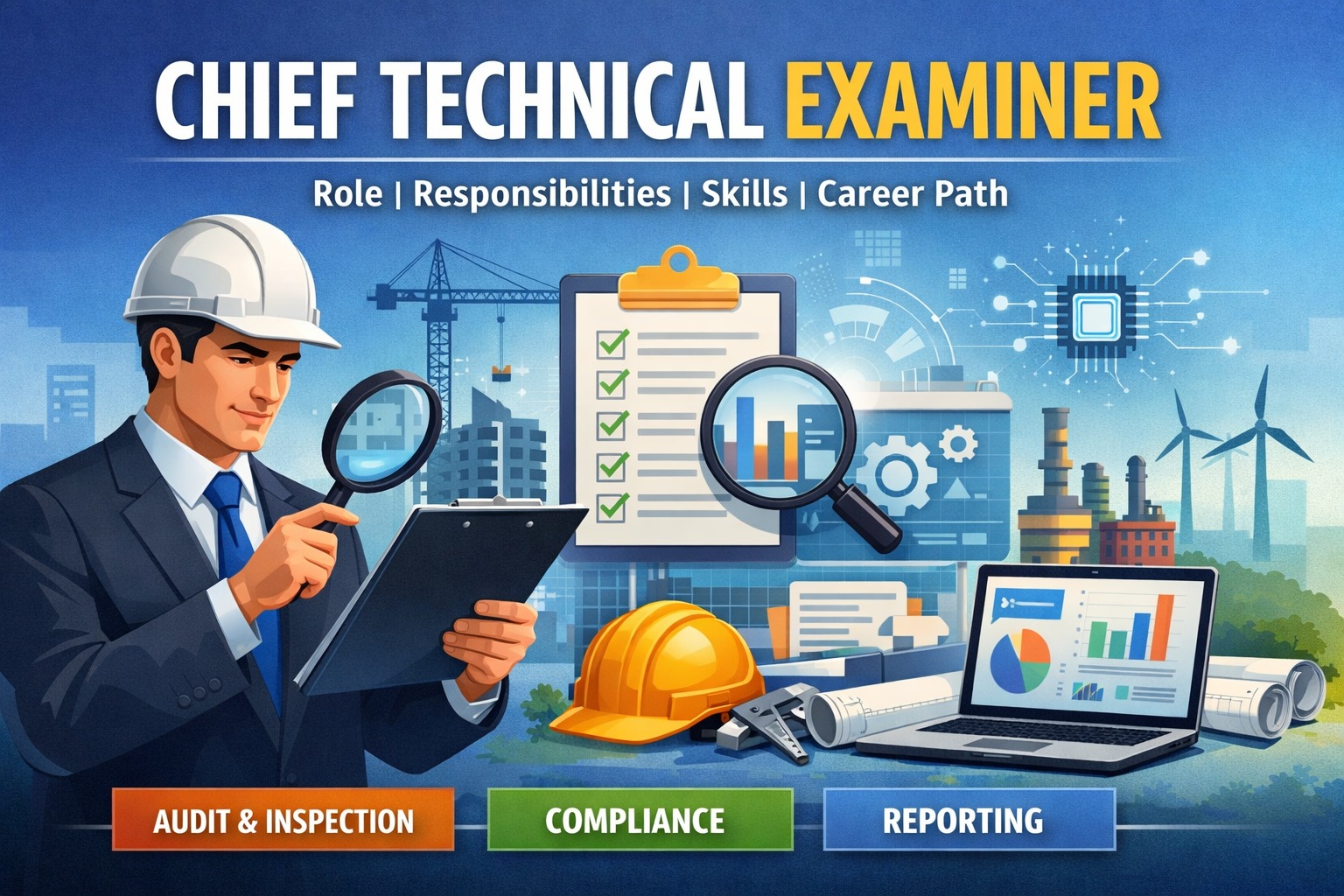

A Chief Technical Examiner (CTE) is a senior professional who checks, reviews, and evaluates technical work in an organization. The main goal of this role is to make sure that projects, systems, and processes meet required standards, rules, and quality levels. This role is very important in areas like construction, manufacturing, government projects, information technology, and quality assurance Mutstreams
Definition and Scope of the Role
A Chief Technical Examiner is a senior technical authority responsible for examining technical work and ensuring it follows approved standards and guidelines. The CTE does not usually manage daily project work. Instead, the CTE reviews and verifies the work done by others.
The scope of the role can change based on the industry and organization. In government and public projects, the CTE often checks construction quality, procurement processes, and technical compliance. In private companies, the role may focus on product quality, system audits, safety checks, and performance validation.
How the Role Is Different from Similar Positions
Many people confuse the Chief Technical Examiner with other technical leadership roles. The table below shows key differences:
| Role | Main Focus | Key Responsibility | Decision Authority |
|---|---|---|---|
| Chief Technical Examiner | Review and audit | Checks compliance and quality | Can recommend actions and approvals |
| Chief Technology Officer (CTO) | Strategy and innovation | Leads technology direction | Sets tech vision and roadmap |
| Technical Auditor | Audit and compliance | Performs audits and reports | Limited to audit scope |
| Quality Manager | Process improvement | Maintains quality systems | Improves internal processes |
The Chief Technical Examiner is more focused on independent review and verification. The role supports management by providing clear and unbiased technical findings.
Key Responsibilities
The responsibilities of a Chief Technical Examiner are wide and important. These responsibilities help ensure that projects and systems are safe, legal, and reliable.
Main Responsibilities
-
Review technical designs, plans, and documents
-
Check compliance with standards, codes, and regulations
-
Conduct technical audits and inspections
-
Identify risks, defects, and non-compliance
-
Prepare clear technical reports
-
Recommend corrective actions
-
Support investigations when technical issues arise
-
Guide teams on best practices
Typical Work Activities
A Chief Technical Examiner may perform the following activities on a regular basis:
-
Visit project sites to inspect work quality
-
Review tender and procurement documents
-
Check test results and quality records
-
Validate materials and methods used
-
Meet with engineers, managers, and stakeholders
-
Review safety and performance data
Responsibility Breakdown by Area
| Area | Example Tasks |
|---|---|
| Design Review | Check drawings, specifications, and calculations |
| Quality Control | Review test reports and quality plans |
| Compliance | Ensure rules and standards are followed |
| Risk Management | Identify technical risks early |
| Reporting | Prepare findings and recommendations |
Areas of Work and Industry Domains
The role of a Chief Technical Examiner is needed in many sectors. Each sector has its own focus, but the core goal remains the same: ensure technical quality and compliance.
Common Industry Domains
-
Construction and infrastructure
-
Manufacturing and production
-
Information technology and software systems
-
Energy and utilities
-
Transportation and logistics
-
Public works and government projects
-
Healthcare technology and equipment
Examples of Work in Different Sectors
| Sector | Example of CTE Work |
|---|---|
| Construction | Inspect building quality and materials |
| Manufacturing | Review production quality and safety |
| IT | Check system security and performance |
| Energy | Review plant safety and compliance |
| Healthcare | Verify medical equipment standards |
Skills and Competencies Required
To perform well, a Chief Technical Examiner needs a mix of technical knowledge and soft skills. This role requires both deep understanding and strong communication abilities.
Core Technical Skills
-
Strong knowledge of engineering or technical field
-
Understanding of standards and regulations
-
Ability to read and review technical drawings
-
Knowledge of quality management systems
-
Familiarity with safety and compliance requirements
Soft Skills
-
Clear communication
-
Analytical thinking
-
Attention to detail
-
Problem-solving ability
-
Leadership and mentoring
-
Ethical judgment and integrity
Skill Importance Table
| Skill | Why It Is Important |
|---|---|
| Technical expertise | To judge the quality of work |
| Communication | To explain findings clearly |
| Analytical thinking | To identify root causes |
| Integrity | To maintain trust and fairness |
| Leadership | To guide teams and influence change |
Qualifications and Career Path
Becoming a Chief Technical Examiner usually takes years of education and experience. Most people reach this role after working in technical or engineering positions.
Educational Background
Common educational paths include:
-
Bachelor’s degree in engineering, technology, or a related field
-
Master’s degree for senior or specialized roles
-
Specialized training in quality, safety, or compliance
Professional Certifications
Certifications can strengthen a candidate’s profile:
-
Quality management certifications
-
Safety and compliance certifications
-
Audit and inspection training
-
Industry-specific certifications
Typical Career Path
Many professionals follow a path like this:
-
Junior engineer or technician
-
Senior engineer or specialist
-
Technical auditor or quality lead
-
Chief Technical Examiner
Career Progression Table
| Career Stage | Role Example | Main Focus |
|---|---|---|
| Entry Level | Junior Engineer | Learn technical basics |
| Mid-Level | Senior Engineer | Lead technical tasks |
| Senior Level | Technical Auditor | Review and inspect |
| Leadership | Chief Technical Examiner | Oversee technical quality |
Tools, Methods, and Frameworks
A Chief Technical Examiner uses many tools and methods to perform reviews and audits. These tools help make the work accurate and efficient.
Common Tools
-
Inspection checklists
-
Audit frameworks
-
Document management systems
-
Testing and measurement tools
-
Data analysis software
Methods Used
-
Technical audits
-
Compliance checks
-
Risk-based reviews
-
Site inspections
-
Document verification
Example Audit Checklist Table
| Item | Check Description | Status |
|---|---|---|
| Design documents | Approved and updated | Pass/Fail |
| Materials | Meet required standards | Pass/Fail |
| Safety measures | Proper safety controls in place | Pass/Fail |
| Test records | Complete and accurate | Pass/Fail |
Challenges in the Role
The role of a Chief Technical Examiner is important, but it also comes with challenges. These challenges can affect decision-making and daily work.
Common Challenges
-
Handling complex technical problems
-
Managing pressure from stakeholders
-
Working with limited or unclear data
-
Keeping up with changing standards
-
Balancing speed and accuracy
-
Dealing with resistance to findings
How to Handle These Challenges
-
Use clear and documented processes
-
Rely on standards and evidence
-
Maintain independence and fairness
-
Communicate findings clearly
-
Continue learning and training
Challenge and Solution Table
| Challenge | Practical Solution |
|---|---|
| Stakeholder pressure | Rely on standards and evidence |
| Complex systems | Break down reviews into parts |
| Changing regulations | Regular training and updates |
| Limited data | Request proper documentation |
Impact and Value to the Organization
A Chief Technical Examiner brings strong value to any organization. The role helps improve quality, safety, and trust.
Key Benefits
-
Reduces technical risks and failures
-
Improves quality of projects and products
-
Supports compliance with laws and standards
-
Builds trust with stakeholders
-
Enhances organizational learning
Organizational Value Table
| Area | Value Provided |
|---|---|
| Quality | Fewer defects and rework |
| Safety | Reduced accidents and risks |
| Compliance | Lower legal and regulatory risks |
| Reputation | Higher trust and credibility |
| Efficiency | Better use of resources |
Future Trends
The role of a Chief Technical Examiner is changing with technology and industry trends. Digital tools and data-driven methods are becoming more common.
Key Trends
-
Use of digital inspection tools
-
Data-driven audits and analytics
-
Remote inspections using digital platforms
-
Increased focus on cybersecurity and IT systems
-
Automation in testing and monitoring
How the Role May Evolve
In the future, Chief Technical Examiners may rely more on:
-
Artificial intelligence to analyze large data sets
-
Real-time monitoring systems
-
Integrated digital compliance platforms
-
Cross-domain knowledge, especially between engineering and IT
FAQs
Is a Chief Technical Examiner the same as a CTO?
No. A CTO focuses on technology strategy and innovation, while a Chief Technical Examiner focuses on reviewing and checking technical work for quality and compliance.
Does every organization need a Chief Technical Examiner?
Not every organization needs a dedicated CTE. However, organizations with complex technical projects, high safety risks, or strict regulations can benefit greatly from this role.
What industries benefit the most from this role?
Industries such as construction, manufacturing, energy, IT, healthcare technology, and public infrastructure benefit the most due to high technical and safety requirements.
How long does it take to become a Chief Technical Examiner?
It usually takes many years of experience, often 10–15 years or more, depending on the industry and role complexity.
Conclusion
The Chief Technical Examiner plays a critical role in ensuring that technical work meets quality, safety, and compliance standards. This role supports organizations by reducing risks, improving performance, and building trust. With strong technical skills, clear communication, and ethical judgment, a Chief Technical Examiner can guide organizations toward better outcomes, as industries become more complex and technology continues to grow, the importance of this role will increase. Organizations that invest in strong technical examination and review processes are better prepared to handle risks, meet regulations, and deliver high-quality results.