

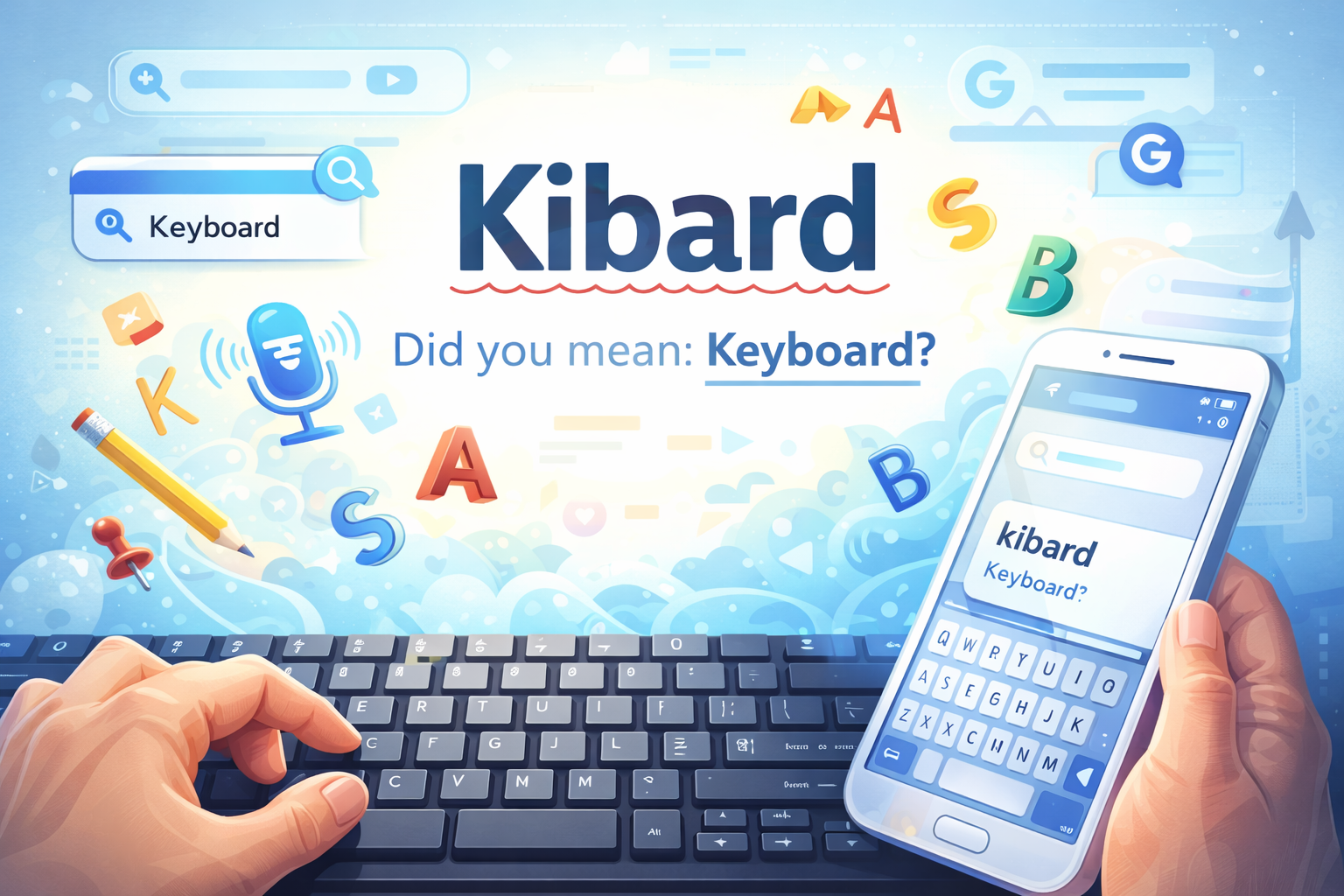
Kibard is a common spelling mistake that people use when they actually mean the word keyboard. Many users type kibard while searching online due to fast typing, mobile keyboard errors, or voice-to-text issues. Search engines understand that kibard usually refers to keyboard and show related results.
This article explains what kibard means, why people use this term, and how typing errors affect digital communication and search behavior Fontlu
What Is Kibard?
The word “kibard” is commonly used online as a misspelling or phonetic version of the word “keyboard.” Many people type “kibard” when they are searching for information about keyboards, typing, or input devices. Search engines like Google usually understand that “kibard” means “keyboard” and show results related to keyboards, this kind of spelling mistake is very common on the internet. People type fast, use mobile phones, or use voice-to-text features. Because of this, small spelling changes happen often. Over time, these mistakes appear in search queries, blog posts, and social media. Even though “kibard” is not a correct dictionary word, it has become part of how people search online.
Why Do People Type “Kibard” Instead of “Keyboard”?
There are many simple reasons why people type “kibard” instead of “keyboard.” Most of these reasons are related to how people type and how digital tools work.
Fast Typing and Muscle Memory
Many people type quickly. When typing fast, small mistakes can happen. Fingers may hit the wrong keys or skip letters. Over time, muscle memory can cause repeated mistakes, especially when typing common words.
Common reasons include:
-
Typing too fast
-
Not looking at the keyboard
-
Using small screens
Mobile Typing Errors
Typing on a mobile phone is different from typing on a physical keyboard. Mobile screens are small, and keys are close together. This makes typing mistakes more likely.
Examples of mobile typing problems:
-
Small keys
-
Autocorrect changing words
-
Touchscreen sensitivity
Voice-to-Text and Accent Issues
Voice typing is becoming more popular. People use voice assistants and speech-to-text tools to type messages or search online. These tools do not always understand accents or pronunciation correctly.
Problems with voice typing:
-
Accent differences
-
Background noise
-
Software misinterpretation
Phonetic Spelling
Some people spell words the way they sound. The word “keyboard” may sound like “kibard” to some users, especially non-native English speakers. This leads to phonetic spellings in search queries.
Autocorrect Limitations
Autocorrect tools try to fix spelling mistakes, but they do not always work perfectly. Sometimes they do not correct uncommon words, and sometimes they correct the wrong word.
Is “Kibard” a Real Word?
“Kibard” is not a real word in standard English dictionaries. It is considered a spelling mistake or informal variation of the word “keyboard.” However, the internet has changed how language works.
Informal Language Online
Online communication is often informal. People use:
-
Short forms
-
Slang
-
Misspellings
Over time, some misspelled words become common in online spaces. Even though they are not “correct,” they are widely understood.
Language Evolution
Language changes over time. New words appear, and meanings change. While “kibard” is not officially accepted, it shows how digital communication shapes language. Search engines and platforms now focus more on meaning and intent than on perfect spelling.
How Search Engines Treat Misspellings
Modern search engines are smart. They use AI to understand what users mean, even if words are misspelled. When someone types “kibard,” the search engine usually understands that the user is looking for “keyboard” and shows related results.
What Is a Keyboard?
A keyboard is an input device used to enter text, numbers, and commands into a computer, tablet, or other digital device. It is one of the most common tools people use to interact with technology.
Basic Parts of a Keyboard
A typical keyboard includes:
-
Letter keys (A–Z)
-
Number keys (0–9)
-
Function keys (F1–F12)
-
Control keys (Shift, Ctrl, Alt)
-
Navigation keys (arrows, Home, End)
How a Keyboard Works
When a key is pressed, the keyboard sends a signal to the device. The device then shows the corresponding character or performs an action. This process happens very quickly, making typing smooth and fast.
Physical vs Virtual Keyboards
Keyboards can be physical devices or on-screen tools.
| Type of Keyboard | Description | Common Use |
|---|---|---|
| Physical Keyboard | A real device with keys | Desktop and laptop computers |
| Virtual Keyboard | On-screen keyboard | Smartphones, tablets, kiosks |
Types of Keyboards
There are many types of keyboards, each designed for different needs and users.
Mechanical Keyboards
Mechanical keyboards use individual switches under each key. They are popular among gamers and writers.
Advantages:
-
Durable
-
Tactile feedback
-
Customizable
Disadvantages:
-
More expensive
-
Louder than other keyboards
Membrane and Chiclet Keyboards
Membrane keyboards use a rubber layer under the keys. Chiclet keyboards are a type of membrane keyboard with flat, spaced keys.
Advantages:
-
Quiet
-
Affordable
-
Lightweight
Disadvantages:
-
Less tactile feedback
-
Shorter lifespan
Virtual and On-Screen Keyboards
These keyboards appear on screens and are used on touch devices.
Advantages:
-
No physical hardware needed
-
Useful for accessibility
-
Easy to customize
Disadvantages:
-
Slower typing speed
-
Less accurate for long typing
Keyboard Layouts
Keyboards come in different layouts and sizes.
| Layout Type | Description | Best For |
|---|---|---|
| Full-Size | Includes number pad | Office work |
| TKL (Tenkeyless) | No number pad | Compact desks |
| 60% Layout | Very small, minimal keys | Travel and gaming |
How Typing Errors Like “Kibard” Affect Digital Communication
Typing mistakes may seem small, but they can affect how messages are understood and how people are perceived online.
Impact on Professional Communication
In professional settings, spelling mistakes can:
-
Reduce credibility
-
Cause misunderstandings
-
Create a poor impression
For example, emails or documents with many errors may appear careless.
Casual Communication and Social Media
On social media and chat apps, people are more relaxed. Spelling mistakes are often accepted and understood. In these spaces, speed and emotion are more important than perfect spelling.
Role of Autocorrect and AI Tools
AI tools help reduce mistakes, but they are not perfect. They can:
-
Fix simple errors
-
Suggest better words
-
Sometimes change the meaning of a message
Users still need to review their text, especially in important messages.
Search Behavior Around “Kibard”
The keyword “kibard” shows how people search online and how search engines handle misspellings.
Why “Kibard” Gets Search Traffic
Even though “kibard” is incorrect, people still search for it. This happens because:
-
Users type fast
-
Users are not careful with spelling
-
Mobile and voice search create errors
How Google Understands Misspelled Keywords
Google uses AI models to understand user intent. When someone types “kibard,” Google usually shows results for “keyboard.” This helps users find what they need without perfect spelling.
Should Websites Target “Kibard” for SEO?
Websites can mention common misspellings like “kibard” to:
-
Match user search behavior
-
Capture long-tail traffic
-
Improve user understanding
However, the main focus should still be on correct terms like “keyboard.” Misspellings can be included naturally in explanations or FAQs.
Keyword Intent vs Keyword Accuracy
SEO today focuses more on intent than exact words. This means:
-
Understanding what the user wants
-
Creating helpful content
-
Using clear and simple language
How to Avoid Common Typing Mistakes
Reducing typing mistakes can improve communication and professionalism.
Practical Typing Tips
-
Slow down when typing important messages
-
Use proper finger placement
-
Take short breaks to avoid fatigue
Using Autocorrect Wisely
-
Check autocorrect settings
-
Add custom words if needed
-
Review text before sending
Proofreading Habits
-
Read your text once before sending
-
Use spell-check tools
-
Ask someone to review important content
Keyboard Settings and Tools
-
Choose the right keyboard layout
-
Adjust keyboard sensitivity on mobile
-
Use larger on-screen keyboards if available
Future of Typing and Input Methods
The way people input text is changing. New technologies aim to reduce errors and make communication easier.
Voice Input Improvements
Voice tools are improving with better AI models. Future systems may:
-
Understand accents better
-
Work in noisy environments
-
Reduce transcription errors
AI-Assisted Typing
AI tools can suggest full sentences, fix grammar, and improve clarity. This can:
-
Save time
-
Reduce spelling mistakes
-
Improve writing quality
Gesture and Touch Input
New input methods include:
-
Gesture typing on touchscreens
-
Swiping keyboards
-
Handwriting recognition
These tools aim to make typing faster and more natural.
Comparison: “Kibard” vs “Keyboard” in Search Intent
| Aspect | Kibard | Keyboard |
|---|---|---|
| Spelling | Incorrect | Correct |
| User Intent | Looking for keyboard-related info | Looking for keyboard-related info |
| Search Engine Understanding | Usually corrected to keyboard | Direct match |
| SEO Value | Long-tail, low competition | High competition |
This table shows that even incorrect spellings can reflect the same user intent.
Simple Checklist for Better Typing Accuracy
Here is a simple checklist users can follow:
-
Check spelling before sending messages
-
Use spell-check tools
-
Type slowly in important contexts
-
Keep software and keyboard settings updated
-
Practice typing skills regularly
FAQs
Is kibard the same as keyboard?
Yes, in most cases people use “kibard” when they mean “keyboard.” It is simply a spelling mistake.
Why do people spell keyboard as kibard?
Reasons include fast typing, mobile typing errors, voice-to-text mistakes, and phonetic spelling.
Does Google understand misspellings?
Yes, Google and other search engines use AI to understand user intent, even when words are misspelled.
Can “kibard” be used in content for SEO?
It can be mentioned naturally when explaining common typing mistakes, but main content should focus on the correct word “keyboard.”
Conclusion
The term “kibard” is a simple example of how people type and search online in real life. While it is not a correct English word, it shows how common typing mistakes, mobile usage, voice input, and informal communication shape online language. Search engines now focus more on understanding what users mean rather than just matching exact words, by understanding why mistakes like “kibard” happen, users can improve their typing habits, and content creators can better match user intent. As technology continues to improve, tools like AI-assisted typing and better voice recognition will help reduce errors and make digital communication smoother. In the end, clear communication is more important than perfect spelling, as long as the message is understood.

