

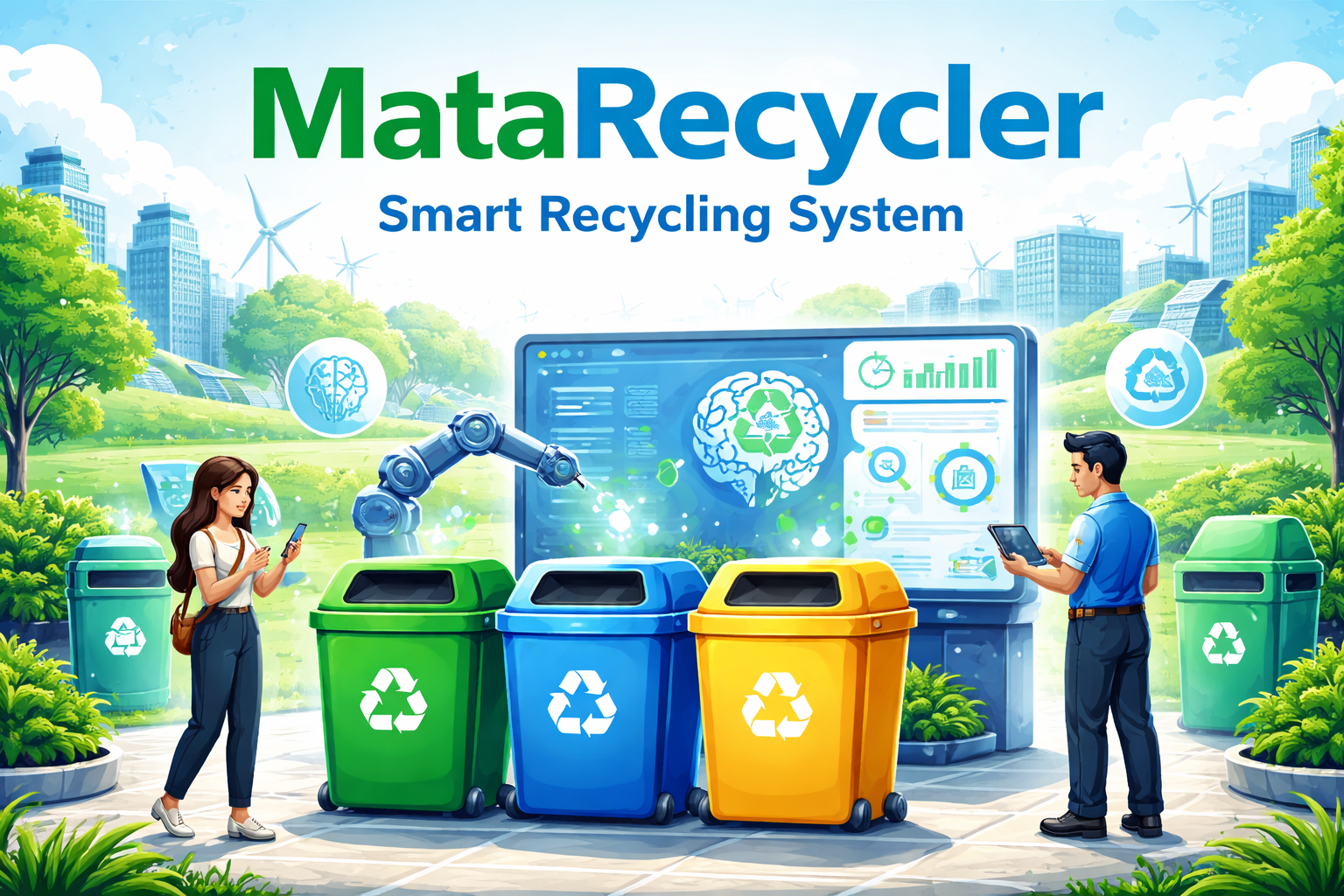

MataRecycler is a smart recycling system that helps people, businesses, and cities manage waste in a better way. It uses technology like artificial intelligence, smart bins, and data tracking to improve how waste is collected and sorted. The main goal of MataRecycler is to reduce landfill waste and increase recycling rates by making the recycling process simple, fast, and more accurate. As waste problems grow around the world, MataRecycler offers a modern solution that supports sustainability and the circular economy Grospal
What Is MataRecycler?
MataRecycler is a modern recycling system that uses smart technology to improve how waste is collected, sorted, and reused. It combines tools like artificial intelligence (AI), sensors, data analysis, and connected platforms to make recycling easier, faster, and more accurate. The main goal of MataRecycler is to reduce waste sent to landfills and increase the amount of material that can be reused in a circular economy. Traditional recycling systems often face problems such as mixed waste, high contamination, low recovery rates, and poor tracking of materials. MataRecycler addresses these problems by using digital tools to guide people, businesses, and recycling facilities toward better waste practices. It helps turn waste into valuable resources instead of treating it as something to throw away.
The Problems With Traditional Recycling Systems
Traditional recycling has helped reduce waste, but it has many limits. Understanding these problems helps explain why MataRecycler is needed.
Low Recycling Rates
Many regions collect recyclable materials, but only a small part of this waste is actually recycled. Reasons include:
-
Poor sorting at the source (homes and offices)
-
Lack of clear instructions for people
-
Limited local recycling facilities
High Contamination
Contamination happens when non-recyclable items are mixed with recyclable materials. This can cause:
-
Entire batches of recyclables to be rejected
-
Higher costs for sorting and cleaning
-
More waste going to landfills
Manual and Inefficient Sorting
In many recycling plants, sorting is still done by hand or with basic machines. This leads to:
-
Slow processing times
-
Human error
-
Safety risks for workers
-
Higher labor costs
Lack of Data and Visibility
Traditional systems often do not track:
-
How much waste is collected
-
What types of materials are most common
-
Where contamination happens
Without good data, it is hard to improve recycling programs.
Poor Coordination Between Stakeholders
Recycling involves many groups:
-
Households
-
Businesses
-
Waste collectors
-
Recycling facilities
-
Local governments
When these groups do not share data or work together, the system becomes fragmented and less effective.
How MataRecycler Works
MataRecycler is built as a connected system with several layers. Each layer plays an important role in improving recycling outcomes.
Smart Collection Layer
This layer focuses on how waste is collected from homes, offices, and public spaces.
Key elements include:
-
Smart bins with sensors to detect fill levels
-
Bins that guide users on what to throw in
-
Scanners or cameras that identify materials
-
Alerts to collectors when bins are full
Benefits:
-
Fewer collection trips
-
Reduced overflow and litter
-
Better separation of waste at the source
AI and Automation Layer
This layer improves how waste is sorted and processed.
Main features:
-
Computer vision to recognize different materials
-
Machine learning models that improve over time
-
Automated sorting lines that separate plastics, metals, paper, and more
-
Detection of contaminated items
Benefits:
-
Faster and more accurate sorting
-
Lower contamination rates
-
Improved worker safety
-
Higher material recovery
Data and Analytics Layer
This layer collects and analyzes data from across the system.
What it tracks:
-
Types and amounts of waste collected
-
Contamination rates
-
Performance of sorting equipment
-
Recycling rates over time
How data is used:
-
Dashboards for managers and city officials
-
Reports for sustainability goals and ESG reporting
-
Insights to improve routes, bin placement, and user guidance
Network and Platform Layer
This layer connects all stakeholders in the recycling process.
It may include:
-
Platforms that connect waste generators with recyclers
-
Systems that route materials to the best facility
-
Marketplaces where recyclable materials can be traded
-
Communication tools for education and feedback
Benefits:
-
Better coordination across the recycling chain
-
Reduced waste handling delays
-
More value from recovered materials
Key Features of MataRecycler
MataRecycler systems often include a wide range of features that work together.
Core Features
-
AI-powered material recognition
-
Smart sorting and contamination detection
-
Real-time monitoring of bins and facilities
-
Data dashboards and reports
-
Support for multiple waste streams
-
Integration with existing waste systems
User Engagement Features
-
Clear visual guides on bins
-
Mobile apps for waste sorting tips
-
Notifications and reminders
-
Gamification (points, rewards for correct recycling)
Operational Features
-
Route optimization for waste collection
-
Predictive maintenance for equipment
-
Performance tracking for facilities
-
Compliance reporting tools
Supported Waste Streams
MataRecycler can support many types of waste. The exact coverage depends on the system design and local facilities.
Common waste streams include:
-
Paper and cardboard
-
Plastics (PET, HDPE, and others)
-
Metals (aluminum, steel)
-
Glass
-
Organic waste (in some setups)
-
Electronic waste (e-waste)
Waste Streams and Typical Handling
| Waste Stream | Common Sources | Typical Handling Method |
|---|---|---|
| Paper | Offices, homes | Sorting, baling, pulping |
| Plastics | Packaging, bottles | Sorting by type, washing |
| Metals | Cans, scrap | Magnetic and eddy current sorting |
| Glass | Bottles, jars | Crushing and color separation |
| Organic Waste | Food scraps | Composting or anaerobic digestion |
| E-waste | Old electronics | Specialized recycling facilities |
Use Cases and Applications
MataRecycler can be applied in many settings. Each use case benefits from smart tools and connected systems.
Residential Recycling
In homes and apartments, MataRecycler can:
-
Provide smart bins with sorting guidance
-
Use apps to teach people how to recycle correctly
-
Track contamination rates by area
-
Improve overall recycling behavior
Commercial and Office Buildings
In offices and commercial spaces, MataRecycler can:
-
Monitor waste generation by department
-
Support company sustainability goals
-
Provide reports for ESG and compliance
-
Reduce waste management costs
Industrial and Manufacturing Sites
In factories, MataRecycler can:
-
Track production waste streams
-
Separate recyclable materials at the source
-
Improve material recovery value
-
Reduce landfill disposal costs
Municipal Recycling Programs
For cities and towns, MataRecycler can:
-
Improve collection efficiency
-
Optimize routes and schedules
-
Monitor city-wide recycling performance
-
Support smart city initiatives
Recycling Facilities
In material recovery facilities, MataRecycler can:
-
Automate sorting lines
-
Reduce contamination
-
Improve worker safety
-
Increase throughput and recovery rates
Environmental Benefits of MataRecycler
MataRecycler supports environmental goals by improving how resources are used.
Reduced Landfill Use
By improving sorting and reducing contamination, more waste is recycled instead of sent to landfills. This helps:
-
Reduce land use
-
Lower methane emissions
-
Protect soil and water
Lower Carbon Footprint
Recycling often uses less energy than producing materials from raw resources. MataRecycler helps:
-
Increase recycling rates
-
Reduce energy use in manufacturing
-
Lower overall greenhouse gas emissions
Resource Conservation
By keeping materials in use, MataRecycler:
-
Reduces demand for virgin raw materials
-
Supports circular economy models
-
Protects natural ecosystems
Operational and Business Benefits
MataRecycler is not only good for the environment. It also offers practical benefits for organizations.
Cost Reduction
-
Lower sorting and labor costs through automation
-
Fewer rejected loads due to contamination
-
Optimized collection routes reduce fuel use
Higher Material Value
Better sorting increases the quality of recovered materials. This leads to:
-
Higher resale value
-
Better market access for recyclables
-
More stable revenue from recovered materials
Better Reporting and Compliance
Organizations can use data from MataRecycler to:
-
Track sustainability goals
-
Support ESG reporting
-
Meet regulatory requirements
Improved Public Image
Using modern recycling systems can:
-
Build trust with customers and communities
-
Support green branding
-
Show commitment to sustainability
Role of AI and Emerging Technologies
AI and digital tools are central to MataRecycler systems.
Computer Vision
Computer vision allows machines to “see” and recognize different materials on sorting lines. This helps:
-
Identify plastics, metals, and paper
-
Detect contamination
-
Improve sorting accuracy
Machine Learning
Machine learning models learn from data over time. They can:
-
Improve material recognition
-
Adapt to new packaging types
-
Optimize sorting processes
Internet of Things (IoT)
IoT devices connect bins, trucks, and facilities. They provide:
-
Real-time data on fill levels
-
Equipment status updates
-
Alerts for maintenance
Robotics
Robotic arms can pick and sort materials with high speed and accuracy. This:
-
Improves worker safety
-
Increases facility throughput
-
Reduces manual labor needs
Ethical, Workforce, and Governance Considerations
Technology brings benefits, but it also raises important questions.
Workforce Impact
Automation can change job roles in recycling facilities. Important points include:
-
Workers may need new skills
-
Training programs are important
-
Safety can improve with reduced manual sorting
Data Privacy
Smart bins and platforms may collect data about waste patterns. Systems should:
-
Protect personal and business data
-
Follow local data protection laws
-
Use data only for system improvement
Transparency and Fair Use
AI systems should be:
-
Transparent in how they make decisions
-
Regularly tested for accuracy
-
Designed to avoid unfair bias
Challenges and Limitations of MataRecycler
While MataRecycler offers many benefits, it also faces challenges.
High Initial Costs
Smart bins, AI systems, and automation require investment. This can be a barrier for:
-
Small cities
-
Small businesses
-
Low-income regions
Infrastructure Integration
Existing waste systems may be old. Integrating new tools can require:
-
Upgrades to facilities
-
Changes in workflows
-
Training for staff
Public Adoption
Technology works best when people use it correctly. Challenges include:
-
Changing habits
-
Providing clear instructions
-
Keeping users engaged over time
Technical Limitations
AI systems may struggle with:
-
New or unusual packaging
-
Dirty or damaged materials
-
Mixed materials that are hard to separate
Comparison Between Traditional Recycling and MataRecycler
The table below shows key differences between traditional systems and MataRecycler.
| Aspect | Traditional Recycling | MataRecycler |
|---|---|---|
| Sorting Method | Manual or basic automation | AI-powered and automated |
| Data Visibility | Limited | Real-time dashboards and reports |
| Contamination Control | High contamination rates | Reduced contamination |
| Adaptability | Low | Continuously improving systems |
| Collection Efficiency | Fixed schedules | Smart, optimized routes |
| Stakeholder Coordination | Fragmented | Connected platforms |
Implementation Roadmap
Organizations that want to adopt MataRecycler can follow a phased approach.
Assessment and Planning
-
Review current waste systems
-
Identify key problems and goals
-
Define success metrics (KPIs)
Pilot Projects
-
Test smart bins or AI sorting in a small area
-
Collect data and user feedback
-
Adjust system design
Scaling
-
Expand to more locations
-
Integrate with city or company systems
-
Train staff and users
Optimization
-
Use data to improve performance
-
Update AI models
-
Add new features and waste streams
Key Performance Indicators to Track
Tracking the right metrics helps measure success.
Common KPIs include:
-
Recycling rate (%)
-
Contamination rate (%)
-
Cost per ton of waste processed
-
Collection efficiency (routes, trips)
-
Material recovery value
-
User participation rates
KPI Tracking
| KPI | Description | Why It Matters |
|---|---|---|
| Recycling Rate | % of waste recycled | Measures system effectiveness |
| Contamination Rate | % of wrong items in recyclables | Affects material quality |
| Cost per Ton | Processing cost per ton of waste | Shows cost efficiency |
| Route Efficiency | Distance or time per collection | Reduces fuel and emissions |
| Recovery Value | Value of recovered materials | Supports financial sustainability |
Future Trends in Smart Recycling
The future of MataRecycler and similar systems is closely linked to smart cities and digital transformation.
Digital Material Passports
Tracking materials across their life cycle can:
-
Improve recycling design
-
Support circular supply chains
-
Increase transparency
Full Automation in Facilities
Future facilities may:
-
Use more robotics
-
Reduce manual handling
-
Operate with higher speed and accuracy
Integration With Smart Cities
MataRecycler can connect with:
-
Traffic and logistics systems
-
Energy management platforms
-
Urban planning tools
Policy and Regulation Alignment
As governments introduce stricter recycling rules, smart systems can:
-
Support compliance
-
Provide audit-ready data
-
Improve public accountability
Why MataRecycler Supports the Circular Economy
The circular economy focuses on keeping materials in use for as long as possible. MataRecycler supports this by:
-
Improving material recovery
-
Reducing waste sent to landfills
-
Enabling better design and reuse decisions through data
-
Connecting waste generators and recyclers
By treating waste as a resource, MataRecycler helps move society away from a “take, make, dispose” model toward a more sustainable system.
FAQs
Is MataRecycler a product or a concept?
MataRecycler can be both. It may refer to a specific platform or to a general approach that combines smart tools to improve recycling systems.
Can small communities use MataRecycler?
Yes. Systems can be scaled. Small communities can start with simple tools like smart bins and data tracking before moving to full automation.
Does MataRecycler replace existing recycling systems?
No. It is designed to improve and modernize existing systems, not replace them fully.
What types of waste can MataRecycler handle?
Most common recyclables such as paper, plastics, metals, glass, and in some cases organic waste and e-waste.
Is AI sorting accurate?
AI sorting is improving quickly. While not perfect, it can significantly reduce contamination and improve recovery when combined with good system design and user education.
Conclusion
MataRecycler represents a new way of thinking about recycling. By combining smart collection tools, AI-powered sorting, data analytics, and connected platforms, it helps solve many of the problems found in traditional recycling systems. The result is higher recycling rates, lower contamination, better use of resources, and stronger support for sustainability goals, while challenges such as cost, infrastructure, and user adoption remain, the long-term benefits of MataRecycler are clear. As technology continues to improve and more organizations adopt smart recycling systems, MataRecycler can play a key role in building cleaner cities, more efficient waste systems, and a stronger circular economy.